
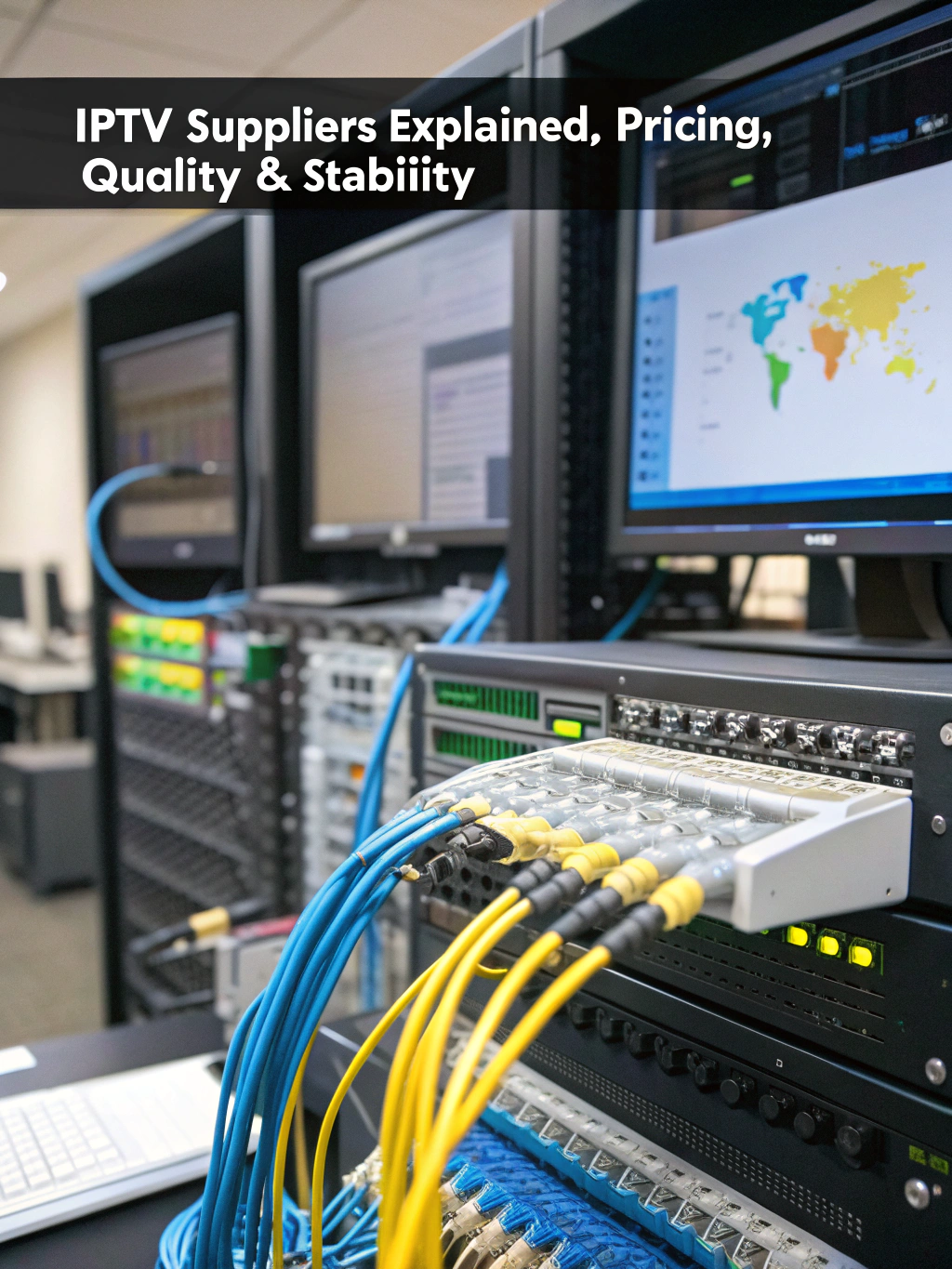
IPTV Suppliers Explained: Pricing, Quality & Stability
Are you tired of paying premium cable prices for channels you never watch? Millions of cord-cutters are discovering that iptv suppliers offer a revolutionary alternative to traditional television. But with hundreds of options flooding the market, how do you separate reliable services from fly-by-night operations? This comprehensive guide breaks down everything you need to know about pricing structures, streaming quality, and service stability.
Whether you’re a first-time buyer or looking to switch providers, understanding the IPTV landscape will help you make an informed decision that saves money without sacrificing entertainment.
What Are IPTV Suppliers and How Do They Work?
IPTV suppliers are companies that deliver television content through internet protocol networks rather than traditional satellite or cable infrastructure. Instead of receiving signals through antennas or coaxial cables, your content streams directly through your broadband connection.
The technology behind IPTV involves encoding live television broadcasts and video-on-demand content into data packets. These packets travel across the internet to your streaming device, where they’re decoded and displayed on your screen in real-time.
Modern iptv suppliers typically operate through dedicated applications or media players. Services like Kodi, TiviMate, and proprietary apps connect users to vast libraries of live channels and recorded content from around the world.
The infrastructure supporting these services includes content delivery networks, server clusters, and sophisticated encoding systems. Premium providers invest heavily in redundant systems to ensure consistent streaming experiences for their subscribers.
Why IPTV Suppliers Matter in Today’s Entertainment Landscape
- Cost-conscious consumers benefit tremendously – Monthly subscriptions typically range from $10 to $30, compared to $100+ for traditional cable packages with similar channel lineups.
- Current importance has skyrocketed – The global IPTV market reached $72 billion in 2023 and continues growing as internet speeds improve worldwide.
- Geographic restrictions dissolve – Expatriates and international viewers gain access to home country programming that’s otherwise unavailable in their current location.
- Flexibility trumps rigid contracts – Most iptv providers offer month-to-month subscriptions without long-term commitments or early termination fees.
- Device compatibility expands options – Watch on smart TVs, smartphones, tablets, computers, and dedicated streaming boxes without additional equipment rental fees.
Key Features to Evaluate When Choosing IPTV Suppliers
- Channel count and variety – Quality providers offer 10,000+ channels spanning sports, movies, news, entertainment, and international programming across multiple languages.
- Video quality options – Look for services providing SD, HD, FHD, and 4K streams to match your internet capabilities and display equipment.
- Electronic Program Guide (EPG) – A well-maintained EPG helps you navigate programming schedules and plan your viewing experience effectively.
- Video-on-demand library – The best iptvs include extensive movie and series collections updated regularly with new releases.
- Catch-up TV functionality – This feature lets you watch programs that aired within the past 24-72 hours, eliminating the need for DVR equipment.
- Multi-device connections – Premium subscriptions often allow 2-5 simultaneous connections, enabling household members to watch different content.
- Customer support availability – Responsive support through live chat, email, or ticket systems indicates a professional operation.
Understanding IPTV Pricing Structures In-Depth

Pricing among iptv suppliers varies dramatically based on several factors. Entry-level services start around $8-12 monthly but often sacrifice channel stability and video quality. Mid-tier options ranging from $15-25 monthly typically deliver the best value proposition for most users.
Premium services charging $25-40 monthly usually justify higher prices through superior infrastructure, dedicated support teams, and more reliable uptime. These providers often maintain backup servers and content delivery networks across multiple geographic regions.
Many suppliers offer discounted rates for quarterly, semi-annual, or annual subscriptions. A service charging $20 monthly might offer a yearly plan at $150, representing significant savings for committed subscribers.
Trial periods have become industry standard among reputable providers. Expect 24-hour to 7-day trials costing $1-5, allowing you to test channel stability, streaming quality, and app compatibility before committing to longer subscriptions.
Be wary of prices that seem too good to be true. Services offering unlimited channels for $5 monthly often operate on shoestring budgets, resulting in frequent buffering, channel outages, and eventual service disappearance.
Evaluating Streaming Quality: What to Look For
Streaming quality depends on multiple factors beyond your internet connection speed. Server capacity, encoding efficiency, and content delivery network distribution all impact your viewing experience significantly.
Bitrate represents the amount of data transferred per second during streaming. Higher bitrates produce sharper images but require faster internet connections. Quality iptv suppliers offer adaptive bitrate streaming that automatically adjusts to your connection speed.
For HD content, expect bitrates between 3-8 Mbps. Full HD streams typically require 8-15 Mbps, while 4K content demands 25+ Mbps. Your internet plan should exceed these minimums to accommodate household network traffic.
Frame rate consistency matters particularly for sports viewing. Look for providers offering 60fps streams for live sporting events, ensuring smooth motion during fast-paced action sequences.
Audio quality often gets overlooked but significantly impacts entertainment value. Premium services provide stereo and surround sound options, with some offering Dolby Digital encoding for compatible equipment.
Step-by-Step Guide to Selecting and Setting Up IPTV Service
- Assess your viewing priorities – List the channels, sports packages, and content types most important to your household. Focus on providers strong in your priority areas rather than chasing the highest channel counts.
- Research provider reputation – Check Reddit communities, Facebook groups, and review sites for user experiences. Pay attention to comments about uptime during major sporting events when server loads peak.
- Test before committing – Purchase trial subscriptions from 2-3 promising providers. Test during prime viewing hours and during live events to evaluate real-world performance under stress.
- Verify device compatibility – Confirm the service works with your preferred streaming devices. Request the specific app names and installation procedures before purchasing.
- Configure your streaming application – Download the recommended player app and input your subscription credentials. Adjust buffer settings and video quality preferences based on your internet speed.
- Optimize your network – Connect streaming devices via ethernet when possible. If using WiFi, ensure your router operates on 5GHz bands and sits within reasonable range of your viewing area.
- Bookmark reliable channels – Create favorites lists for frequently watched channels. This saves time navigating extensive channel lineups and ensures quick access to preferred content.
Service Stability: The Most Critical Factor
Stability separates professional iptv suppliers from amateur operations. Nothing frustrates viewers more than buffering during crucial moments or complete service outages during major events.
Reliable providers maintain multiple server locations across different geographic regions. This redundancy ensures that if one server experiences problems, traffic automatically routes to backup systems without viewer interruption.
Uptime percentages matter significantly. Industry leaders maintain 99%+ uptime, meaning less than 4 hours of potential downtime monthly. Lesser providers might experience multiple outages weekly, particularly during high-demand periods.
Server response time affects channel switching speed. Quality services enable near-instant channel changes, while overloaded servers create frustrating delays between selections and playback.
Content delivery network partnerships indicate serious infrastructure investment. Providers utilizing established CDN services like Cloudflare or Akamai typically deliver more consistent experiences than those relying solely on private servers.
Pros and Cons of Using IPTV Suppliers
- Pros: Dramatic cost savings compared to cable and satellite subscriptions, often 70-80% less for comparable channel access.
- Pros: Massive channel variety including international programming unavailable through traditional providers in the iptv united states market.
- Pros: No contracts or equipment rental fees, with easy cancellation and provider switching.
- Pros: Watch anywhere with internet access, perfect for travelers and households with multiple viewing locations.
- Cons: Service quality varies dramatically between providers, requiring research and testing.
- Cons: Dependent on stable internet connections, making rural or bandwidth-limited areas challenging.
- Cons: Some services operate in legal gray areas depending on content licensing and jurisdiction.
- Cons: Customer support quality ranges from excellent to non-existent among different providers.
Frequently Asked Questions About IPTV Suppliers
What internet speed do I need for IPTV?
Minimum 25 Mbps handles HD streaming comfortably. For 4K content or multiple simultaneous streams, 50-100 Mbps provides headroom for consistent quality without buffering issues.
Can I use IPTV on multiple devices?
Most subscriptions include 1-5 simultaneous connections depending on the plan tier. Family packages typically allow 3+ devices streaming different content simultaneously.
What devices support IPTV services?
Compatible devices include Amazon Firestick, Android TV boxes, Nvidia Shield, smart TVs, smartphones, tablets, computers, and MAG boxes. Firestick remains the most popular choice for its affordability and ease of use.
How do I know if an IPTV supplier is reliable?
Look for providers with established track records, active social media presence, responsive customer support, and positive community reviews. Avoid services with no online presence or only recent establishment dates.
What happens if my IPTV service stops working?
Quality providers offer troubleshooting support and service credits for extended outages. Having backup provider subscriptions ensures continuous entertainment access during unexpected disruptions.
Are there legal IPTV options available?
Yes, legitimate services like YouTube TV, Hulu Live, and Sling TV operate with proper licensing. These cost more but provide guaranteed legal compliance and consistent service quality.
Best Alternatives and Competitor Options
YouTube TV – Premium legitimate option offering 100+ channels with unlimited DVR storage. Higher pricing around $73 monthly but includes major networks and sports coverage with guaranteed reliability.
Hulu + Live TV – Combines on-demand streaming library with 85+ live channels. Disney+ and ESPN+ bundles add value for families and sports fans at approximately $77 monthly.
Sling TV – Budget-friendly legitimate alternative starting at $40 monthly. Customizable packages let you add channel groups matching your interests without paying for unwanted content.
Fubo TV – Sports-focused streaming service with 150+ channels emphasizing live athletics. Premium pricing around $75 monthly appeals to dedicated sports viewers.
Pluto TV – Free ad-supported option offering 250+ channels. Limited live content but excellent for casual viewers seeking no-cost entertainment options.
Expert Tips and Professional Insights
Always use VPN protection – Virtual private networks encrypt your streaming traffic and protect privacy. Quality VPNs like ExpressVPN or NordVPN add minimal latency while providing security benefits.
Maintain backup options – Subscribe to two services simultaneously during your primary provider’s renewal period. This ensures uninterrupted access if your main service experiences problems.
Monitor community forums – Reddit communities and Facebook groups provide real-time information about service issues, new providers, and industry developments affecting iptv suppliers.
Test during peak hours – Evaluate services on Sunday afternoons and weekday evenings when user loads peak. Performance during these periods indicates true capacity and reliability.
Document your subscription details – Save activation codes, support contacts, and subscription dates. This information proves invaluable when troubleshooting issues or disputing charges.
Common Mistakes to Avoid When Choosing IPTV Suppliers
- Chasing the lowest price – Ultra-cheap services often disappear without notice or deliver unwatchable quality. Invest slightly more in established providers with proven track records for better long-term value.
- Skipping trial periods – Never commit to annual subscriptions without testing first. The small trial fee protects against wasting money on incompatible or unreliable services.
- Ignoring device compatibility – Verify your streaming devices work with the service before purchasing. Some providers only support specific platforms or require particular app versions.
- Overlooking customer support – Test support responsiveness during trials by asking questions. Providers who ignore pre-sale inquiries rarely improve after receiving payment.
- Forgetting about internet requirements – Upgrade your internet plan if necessary before subscribing. The best IPTV service performs poorly on inadequate connections.
Conclusion: Making Your IPTV Decision
Navigating the world of iptv suppliers requires balancing pricing, quality, and stability considerations. The ideal service delivers reliable streams at reasonable costs without sacrificing the channels and features you value most.
Start by identifying your must-have channels and acceptable price range. Research provider reputations through community feedback and always test services before committing to extended subscriptions. Remember that the cheapest option rarely provides the best value when factoring in frustration from buffering and outages.
Quality iptv suppliers continue improving their infrastructure and expanding content libraries as the industry matures. By applying the evaluation criteria and strategies outlined in this guide, you’ll find a service matching your entertainment needs while maximizing your subscription investment. Take action today by researching recommended providers and requesting trial access to experience the IPTV difference firsthand.